Arctic Awakening
tools / design / code / sound / writing
Into the Snow: Building Arctic Awakening
Gearing up for the climb
Arctic Awakening was the first GoldFire game to use third-party audio middleware. Until then, the studio had relied on Howler.js, the audio library James created himself.
One of Benji's early responsibilities was evaluating the available options. Wwise's workflow felt tedious to him, but FMOD was an immediate fit.
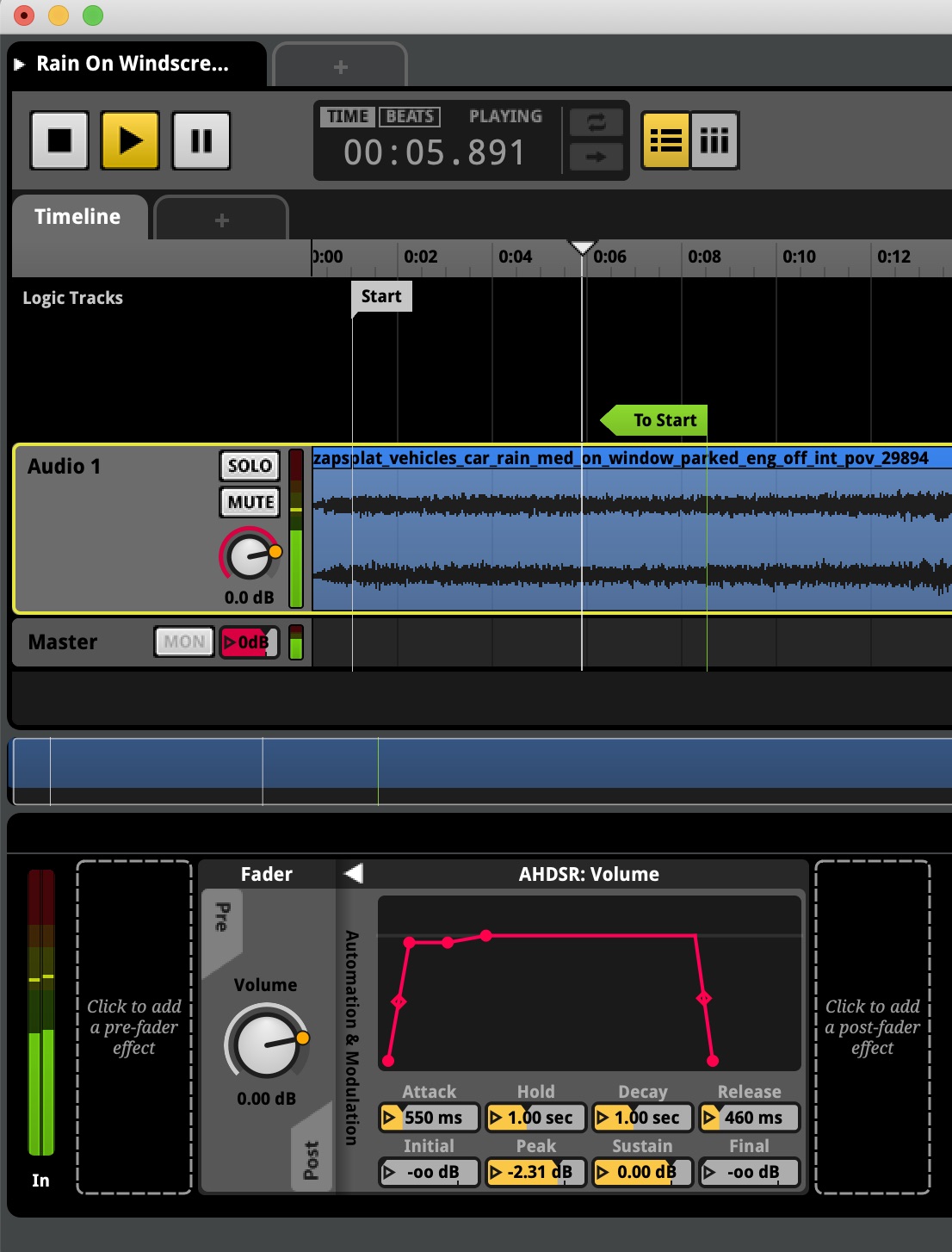
Having spent nearly two decades working with digital audio workstations such as Logic, he found FMOD's timeline-based approach intuitive. Sounds could be assembled, layered, and revisited in a familiar creative environment, with the flexibility to keep refining them as the game evolved.
“It's so nice to be able to build the sounds out in a timeline that I can go back and tweak at any time,” he says. “Now I wouldn't want to make a game without it.”
That preference for tools that support experimentation would recur throughout his work on Arctic Awakening. The best systems weren't simply those that made something possible; they were the ones that made it easier to keep making it better.
One example was the environmental audio system. As Kai moves between the outdoors, a cavern, a tunnel, or a large interior, the game needs to communicate those changing spaces without abrupt, artificial transitions.
Over the course of development, Benji refined the triggers responsible for driving those environmental parameters. His eventual solution used a box collider with separate values defined at its front and back. As the player moved through the box, the values smoothly interpolated between the two sides.
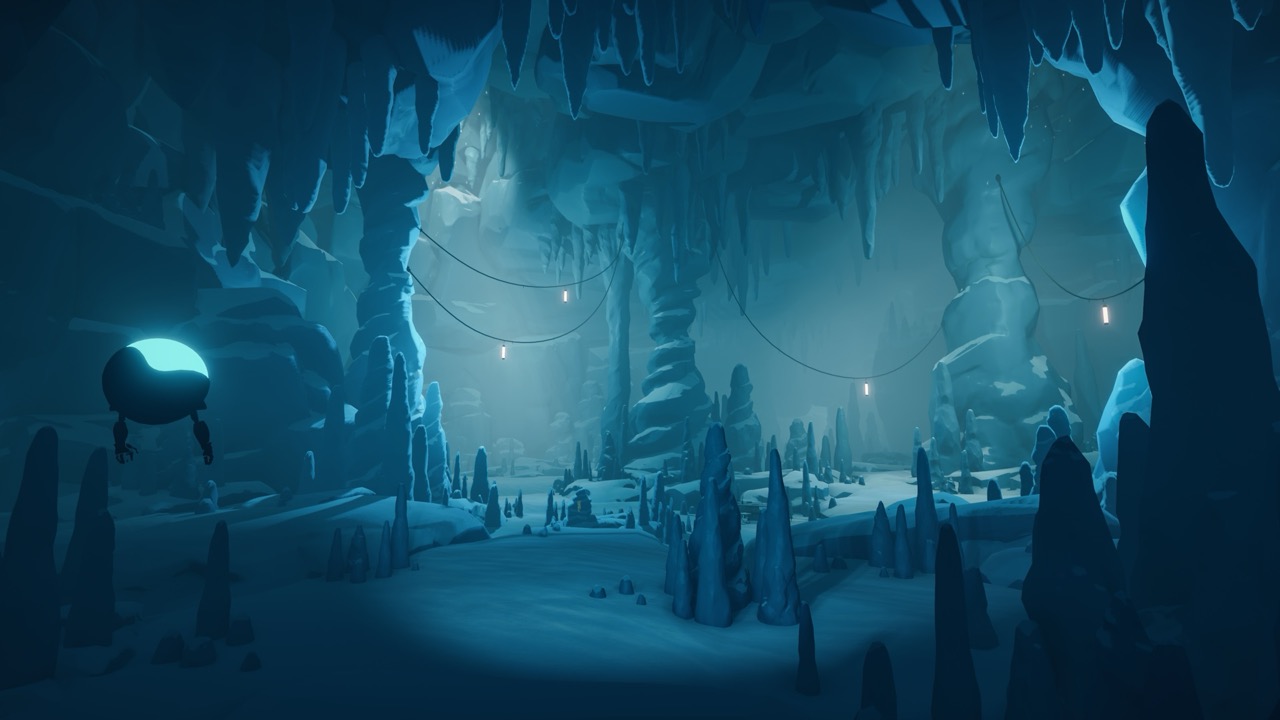
At the mouth of a cave, for example, the game could gradually shift from an outdoor acoustic environment to the reverberant interior. The same basic component could handle spaces of different sizes and transitions of different kinds.
It was a practical solution to a subtle problem. Players might not consciously register the changing parameters, but the soundscape could respond to their movement in a way that made the world feel continuous and physical.
Five years in the making, Arctic Awakening was a crash course in building ambitious games—and the project that helped turn years of experimentation into a new kind of creative confidence.
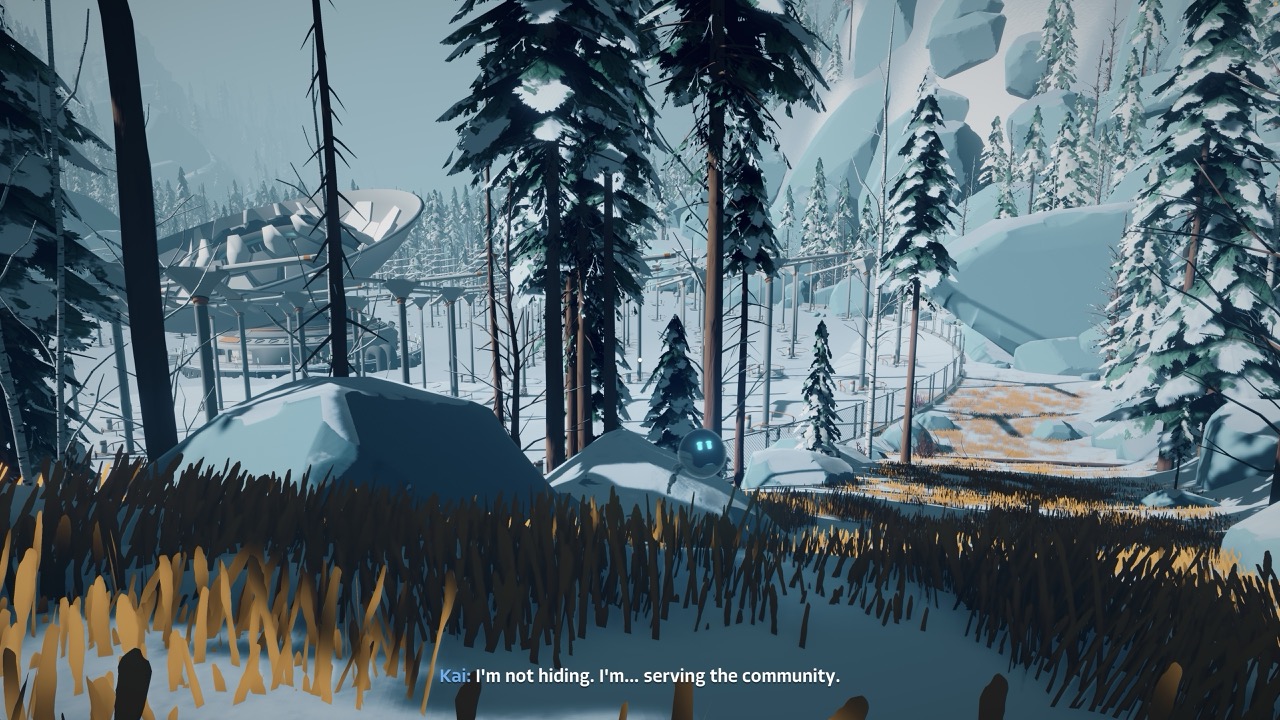
In the spring of 2019, GoldFire Studios was ready for a change of scenery.
Since joining the studio in 2015, Benji had worked across design, development, technical art, bug fixing, and sound design on two previous games. The studio's recently completed Exocraft had grown out of a pitch day devoted to the simple, browser-based multiplayer games that had defined much of its earlier work. Now the team was looking toward a different kind of future: 3D worlds, built in Unity, with the freedom to create something more substantial.
For Benji, the news was almost too good to be true.
“I felt like I had won the lottery,” he recalls. “I wanted to make 3D games since I was a kid, but I had never really gotten very far with it as a hobby. Now I was getting paid to develop those skills and build something substantial.”
The pitch that caught his imagination was a first-person science-fiction mystery set in a snowy mountain wilderness. Benji had always loved first-person games, particularly adventures, and this one promised an opportunity to explore a new dimension of game development—literally.
The result would be Arctic Awakening, a dramatic adventure about survival, mystery, and the human experience in a remote, unforgiving landscape. It would also become a five-year education in what it takes to bring an ambitious game across the finish line.
A world that sounds real
Arctic Awakening needed to feel grounded. Its protagonist, Kai, was fighting for survival, and players needed to believe in that struggle. The naturalistic wilderness also had an important job to do: establish a convincing reality against which the game's science-fiction elements could feel strange, threatening, and extraordinary.
Benji drew inspiration from the worlds of Red Dead Redemption and The Last of Us, as well as the film and television influences that director James brought to the project, including LOST and The Revenant.
But GoldFire was a small studio, working without the resources for extensive field recording or bespoke foley. Most of the game's soundscape had to be assembled from existing material, often by combining and reshaping recordings from affordable sample libraries.
“Shout out to Zapsplat!” Benji says.
The constraint was real, but so was the creative opportunity. Naturalistic sound established the physical world; the more speculative technology gave the audio team room to express something less literal. Ominous low hums, disquieting electrical sparks, unexplained bumps in the night: each could reinforce the atmosphere of mystery and tension.
And sometimes, that tension needed a little release.
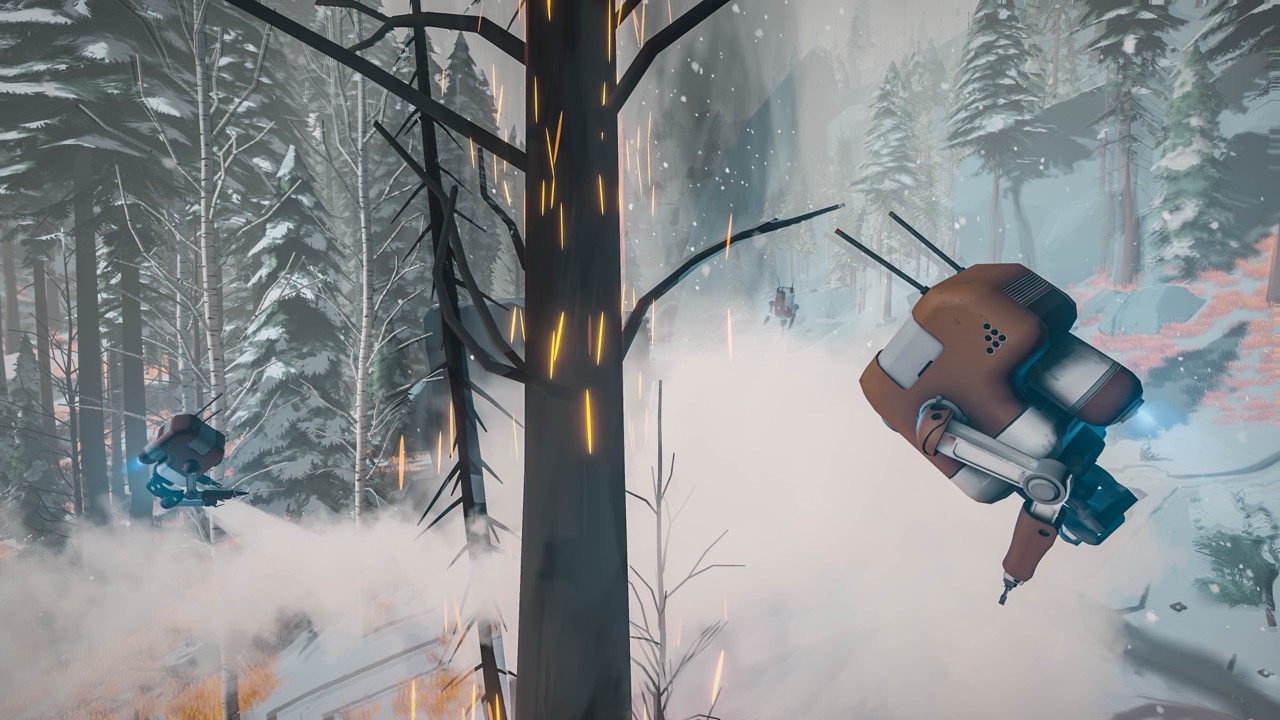
The facility at the heart of Arctic Awakening has a long history of artificial-intelligence workers, including robotic drones. The newer models have sleek, sinister motors. The older machines, by contrast, look decidedly clunky.
Benji leaned into that difference. Rather than making every machine sound intimidating, he gave the older drones the puttering motors of little mopeds. Their mechanical sputter becomes especially funny when one whizzes past the player, thanks to FMOD's built-in Doppler effect.
It's a small joke, but a revealing one. Even in a game built around dramatic stakes, sound can give a machine personality—and a moment of levity can make the surrounding world feel more alive.
The machinery beneath the ice
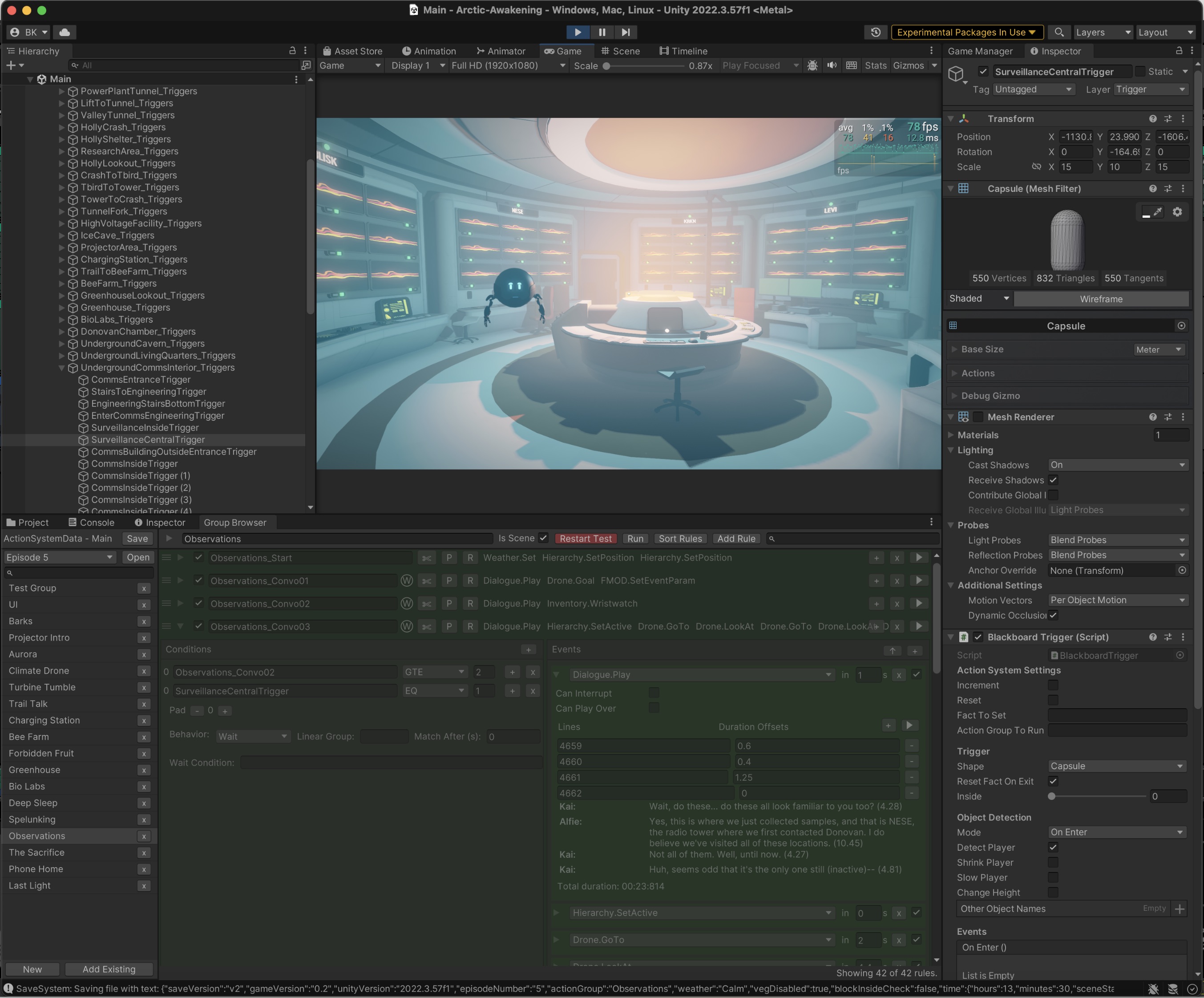
Audio was only one part of Benji's contribution. Early in development, he also took responsibility for two systems that would underpin much of the game's interactive world: the save system and the Action System, a rules engine for controlling what happened in the game and when.
The save system proved particularly challenging.
James wanted players to be able to save anywhere, at any time. In a huge, interactive world, that meant tracking a potentially enormous amount of state. Objects move, events occur, and players do things developers never anticipated. Every new discovery during testing seemed to reveal another detail the save system needed to remember.
Benji initially favored a more limited checkpoint system, which would have kept saving and restoring manageable by restricting it to the beginning of each chapter. But that wasn't the experience the team wanted to deliver, so he kept working toward the more demanding goal.
After a couple of years, he found a deceptively simple solution: a component called SaveMe.
The component did nothing at all. Its presence on a GameObject simply told the save system that it needed to remember that object's position and rotation when serializing the game state. Put it on something that moved, and the system knew to capture it.
That small idea made the broader problem much more manageable. Instead of requiring every object to be handled through a bespoke solution, the system offered a simple, reusable way to mark what needed preserving.
The resulting save system grew considerably—its main script eventually approached 2,000 lines—but it worked.
“That's offensive to my designer sensibilities,” Benji jokes. “But it works beautifully, and that's what really matters.”
The Action System approached a different challenge: how to make a narrative unfold coherently in a world where players have considerable freedom.
Inspired by a GDC talk from Valve's Elan Ruskin about the rules engine used for dialogue and events in Left 4 Dead, the team built a system around three main elements. A Blackboard stored named Facts about the game's state. Conditions checked those Facts, and Events performed actions when the right conditions were met. Action Groups organized the Rules that connected them.
A Fact might represent whether Kai was indoors or outdoors, with a value that could transition smoothly between the two. An Event might play dialogue, display a choice, trigger an animation, or update another Fact. A Rule could track (with a Fact of its own) whether an event sequence was running, completed, or skipped.
Together, these pieces let the team describe what should happen and under which conditions, rather than writing a separate block of bespoke code for every narrative sequence.
But flexibility brought its own difficulties. Players could approach situations in unexpected ways, and the team had to ensure that the story still made sense regardless of the order in which events occurred. Sometimes, players could end up stuck with no way forward.
Those dead ends were not solved by the architecture alone. They required repeated playtesting, careful thought, and iteration.
The two systems were closely connected: the save system serialized the Blackboard alongside the transforms of objects marked with SaveMe, preserving the state of the world as well as the state of the narrative. The result was an underlying framework designed to support a game that could respond to the player's actions without losing track of where the story stood.
An ear for storytelling
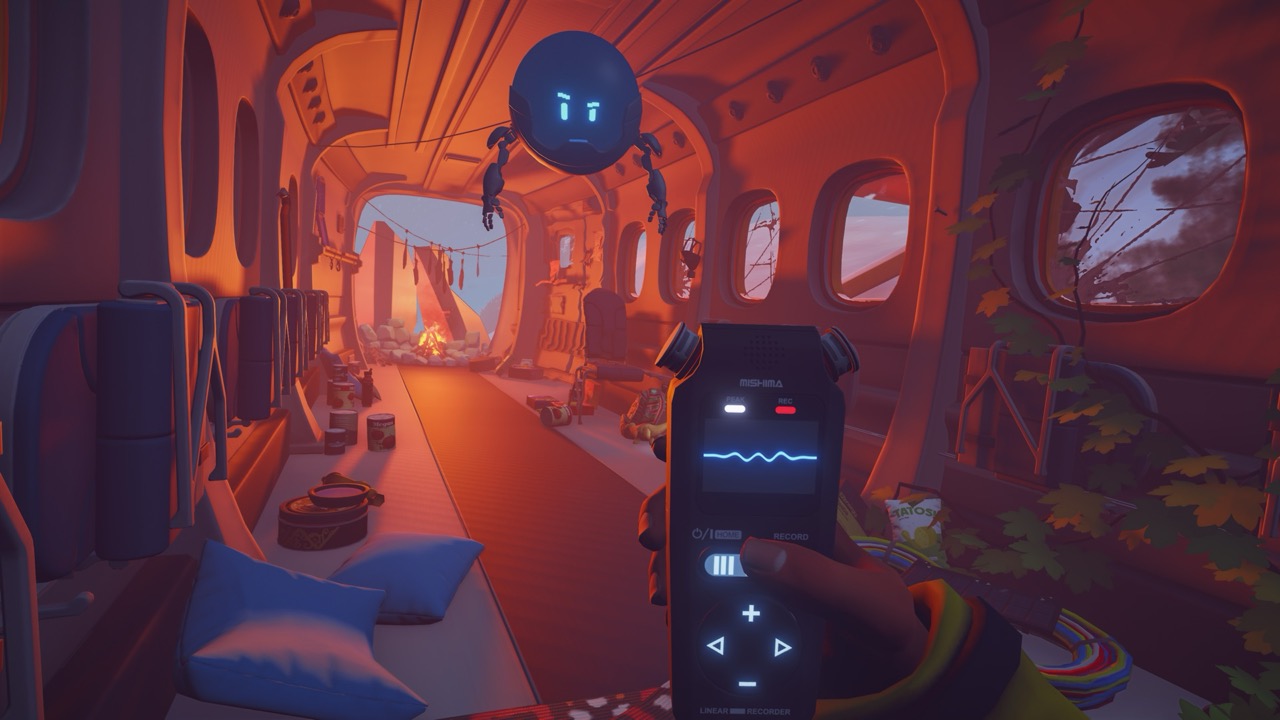
Benji was involved in casting the voice actors, listening not only for performance quality but also for the sonic qualities of their recordings. James directed the recording sessions remotely over video calls, which meant the actors had to serve as their own audio engineers.
And then Benji played the game. A lot.
“I don't think I will ever in my life put as many hours into a game as I have into Arctic Awakening,” he says.
Playing every day meant knowing every line and every delivery. When something didn't quite work, he heard it again and again. He passed feedback to James, and the team maintained a spreadsheet of lines to re-record, with notes on what to try next.
It was painstaking work, but it was also part of how the game was refined: not only through its architecture and mechanics, but through the accumulated judgment of people who had spent years listening closely.
Five years of becoming a better developer
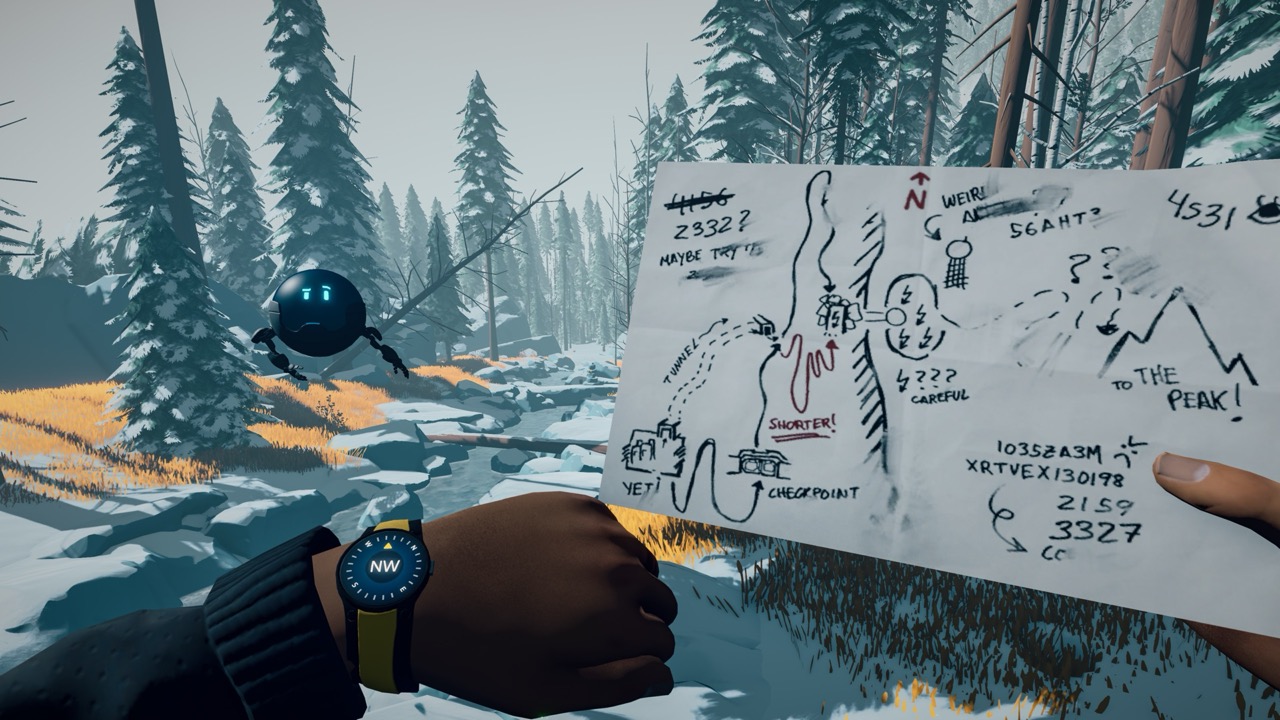
Arctic Awakening took longer to make than the team originally anticipated. In early 2021, GoldFire announced that the game's first chapter would arrive in 2022. By early 2022, it was clear that the plan to release regular episodes didn't fit the realities of development and marketing. The team shifted to a single release, while retaining the game's episodic structure.
As the team chipped away, the target moved from 2022 to 2024, then again to 2025.
For Benji, the project's central vision remained surprisingly consistent. The team had spent the first few months establishing a solid foundation. After that came years of iteration and polish: improving the game, discovering edge cases, refining performances, and making the systems work together.
The experience changed him, though—not necessarily in the ways a player might expect.
By the end of development, he and James were the two core team members who had seen the project through from beginning to end. They had spent years learning how to build this kind of game, solving problems they hadn't known to anticipate, and discovering how much work was involved in realizing their ambitions.
That experience paid off.
“James and I both got really good at making games,” Benji says. “So much so that now, a little over a year out from releasing Arctic Awakening, we're pretty close to releasing another really great game.”
And, perhaps most importantly, development has become fun again.
It feels different when the work flows—when technical decisions come more naturally, when creative ideas can be explored without every step becoming a struggle, and when the team can enjoy the thing it's making while it's making it.
For Benji, Arctic Awakening was not just a long-delayed release or a collection of technical accomplishments. It was the project that helped turn years of learning into confidence, and made the next creative challenge feel exciting rather than daunting.
He's looking forward to seeing players enjoy what the team is building now, and to finding out what he'll build next.
If you'd like Benji to help you build your next great project, he'd love to hear from you.