RANCHONAUTS
design / code / sound
The Art of Getting Lost in Ranchonauts
How a co-op game about herding sheep became a playground for emergent chaos, experimental audio, and the unpredictable personalities of friends.
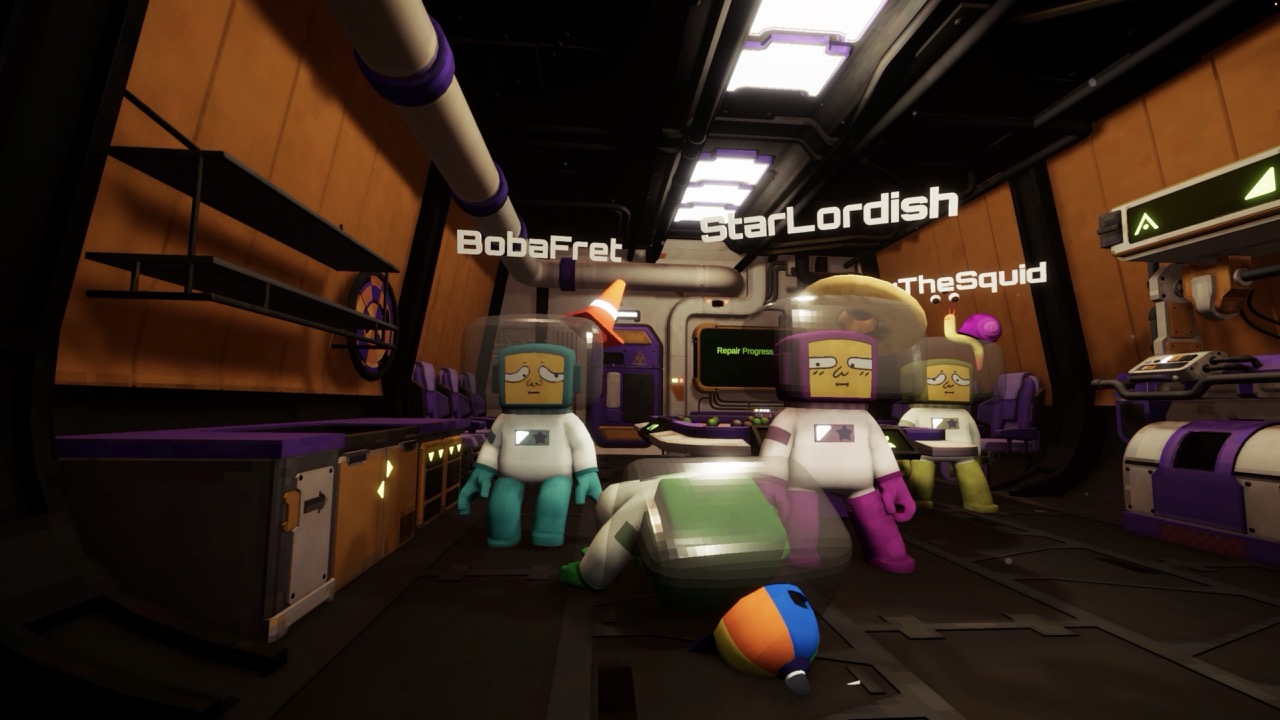
Partway through a run of Ranchonauts, somebody would inevitably ask the same question.
“Does anybody know what happened to Rafael?”
The landscapes are vast, and without a compass it's easy to lose your bearings. Resources are scarce, so during the team's weekly playtests, the four developers — James Simpson, Benji Kay, and 3D artists Alex Moralo and Rafael Mogas — would buy a single compass and try to stick together. Benji would usually take responsibility for navigation.
But Rafael had a habit of disappearing.
He'd vanish somewhere out in the wilderness, apparently swallowed by one of the many hazards scattered across the terrain. The others would carry on, shepherding their modest flock towards the ranch town. Each town has a church where dead players can be resurrected, so the team would stop by the cleric to see whether Rafael needed bringing back to life.
There would be nobody to resurrect. Rafael was alive.
Meanwhile, sundown was approaching. A klaxon sounded to warn of nightfall, when poisonous spores would rise across the landscape. Staying outside the ranch after dark was a dangerous proposition.
And then, at the last possible moment, Rafael would appear in town with an absolutely enormous flock of sheep.
“Hey, guys.”
For Benji, it's a perfect expression of what Ranchonauts has become: a game in which systems create the conditions for chaos, but the players give that chaos its personality.
“I love how Ranchonauts can highlight the unique ways each of us operates and expresses ourselves,” he says. “It lets the individuality of players shine through.”
Finding the game inside the prototype
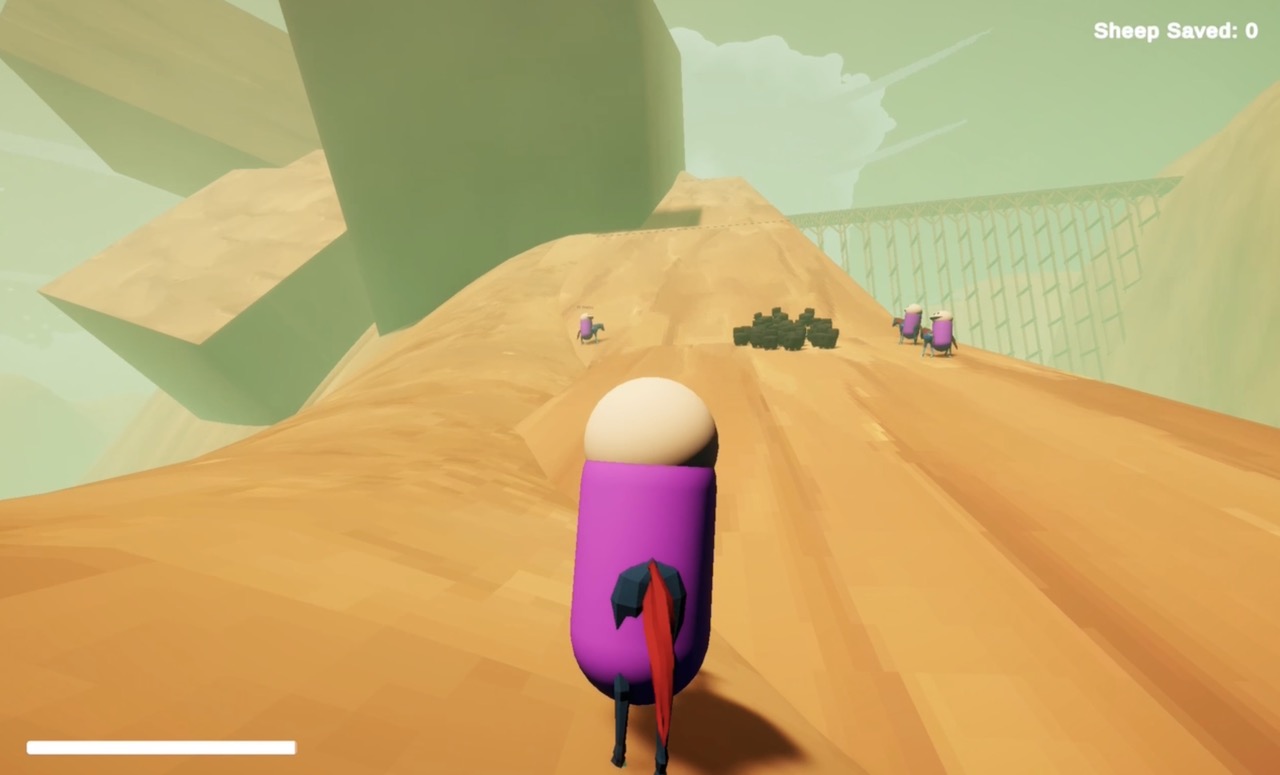
The project began around ten months ago, initially under the decidedly unromantic name Co-Op. The team had recently finished work on Arctic Awakening and had been spending time together playing co-operative games such as Lethal Company, Peak, and the YAPYAP demo. They wanted to make something they would enjoy playing themselves.
The first task was to establish a foundation: players who could inhabit the same world, proximity voice chat, networking, and a collection of gameplay prototypes. The team built different ideas in parallel and tested them together each week.
Those early experiments were enjoyable in an important but incomplete way. Simply sharing a virtual space with friends, exploring freely and being silly together, already delivered much of the appeal of co-op games. But the prototypes didn't necessarily feel compelling as games in their own right.
The team had set out to keep experimenting until they found something that worked in its simplest form. When the group settled on a sheepherding prototype, Benji wasn't entirely convinced they had found it.
“It was cool but it didn't fire us up,” he recalls. He worried they might have committed to the idea too early.
Director James Simpson saw more potential. Sheepherding could be the framework for a much richer experience: exploding bushes, collapsing bridges, lightning strikes, and other hazards could turn a straightforward task into a succession of disasters. A General Store could give players access to increasingly ridiculous tools, from a sheep cannon to a shrink ray.
The appeal became clearer as the team began building on that foundation. What had initially seemed like a relatively simple objective could become a vehicle for improvisation, mischief, and the sort of stories that players would tell one another afterwards.
Benji is now glad they followed James's instinct.
By the time the team was approaching the announcement trailer, the game had grown far beyond its original prototype. But the central appeal had become clearer, too: Ranchonauts wasn't just about delivering sheep. It was about everything that might happen along the way.
Engineering for discovery
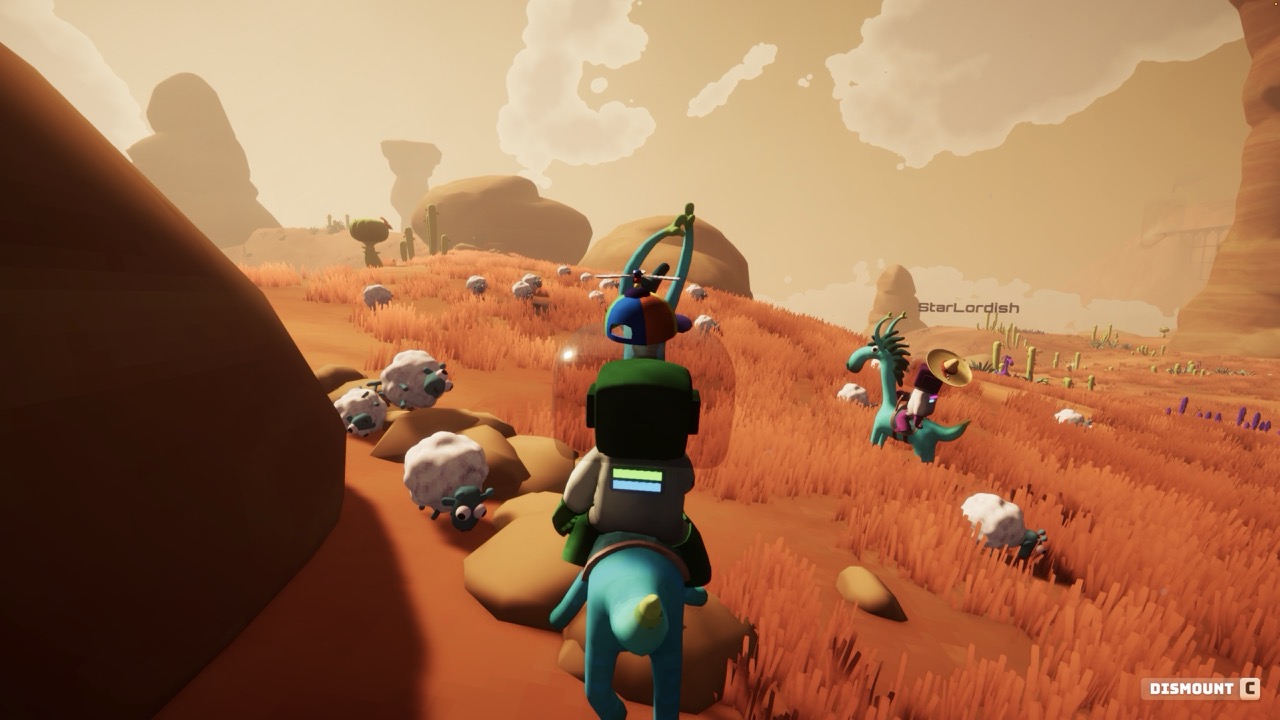
Benji's approach to building the game has been shaped by a straightforward question: what does the team need most right now, and what's the simplest way to implement it so that they can test whether it actually works?
Maintainability is always a consideration, but that doesn't necessarily mean building elaborate, general-purpose frameworks before their usefulness is clear. Straightforward implementations are often easier to understand, modify, and extend when real gameplay reveals what is missing.
The team had an advantage in starting with a foundation informed by its previous work with the Unity engine. James built the player model using FishNet, the networking framework, while Benji concentrated on audio: FMOD for sound playback and Dissonance for real-time voice chat. Existing scripts, components, and experience from Arctic Awakening helped the team get its prototypes running quickly.
That foundation could then evolve in response to actual problems.
Consider the sheep. Ranchonauts can have large numbers of them moving around together, and each one needs to make sounds. Using conventional FMOD Studio Event Emitters attached to individual sheep would be relatively straightforward, but it would also introduce unnecessary overhead. If a whole flock collided with a large rock and every sheep bleated at once, the resulting burst of audio activity could cause a frame-rate drop.
Benji already had a simple FMODPlayer class, developed years earlier during the early days of Arctic Awakening. It provides a convenient way to play a sound by specifying an FMOD event path, with the option to attach the sound to a GameObject or place it at a world position.
Rather than complicate that familiar interface, the team created a more efficient SheepAudio class for the demands of the flock. The principle was the same: start with the simplest useful approach, then make a targeted improvement when the game's needs justify it.
Networking brought its own lessons. GoldFire was experienced with client-server architecture, but Ranchonauts uses a host-based model in which one player's game simultaneously acts as the server. That means a sound triggered locally might work perfectly for the host while remaining inaudible to everyone else.
The solution was another small, purpose-built abstraction: FMODBroadcaster, which retains the straightforward interface of FMODPlayer while ensuring that all clients know which sound to play and where it belongs in the world.
These systems aren't glamorous, and players probably won't know they exist. But they help make the game's more visible chaos possible. A world full of moving animals, interactive objects, and other players is only fun if the underlying systems can keep up.
When the sound becomes the joke
Benji's contribution to Ranchonauts extends well beyond making its audio function correctly. Sound design is one of his principal creative disciplines, and he has been responsible for virtually all of the game's sound effects.
The tonal contrast with Arctic Awakening is considerable. That game's soundscape is dry, dramatic, and realistic. Ranchonauts, by contrast, is a goofy, cutesy science-fiction adventure with a distinctly wild-west flavour.
A sheep falling over might call for a subtle, realistic sound in one game. In Ranchonauts, Benji heard something else entirely.
“We had a bunch of sheep falling over regularly in the game, and that needed to sound like something,” he explains. “And suddenly I'm hearing a bowling ball striking pins in my mind's ear and chuckling to myself.”
The result is the sound of bowling pins when sheep topple over. The sheep cannon gets its own emphatic timpani. These sounds are deliberately incongruous, yet they fit the game's tone so naturally that players rarely stop to question them. Instead, they laugh.
For Benji, there's particular pleasure in watching someone encounter one of these sounds for the first time. The effect is immediate: a small creative decision turns an ordinary gameplay event into a shared joke.
It's also a useful illustration of how creativity and engineering can reinforce one another. A recurring gameplay event creates a need for sound; the process of addressing that need opens up room for an imaginative decision. The technical task becomes an invitation to play.
Giving players a voice
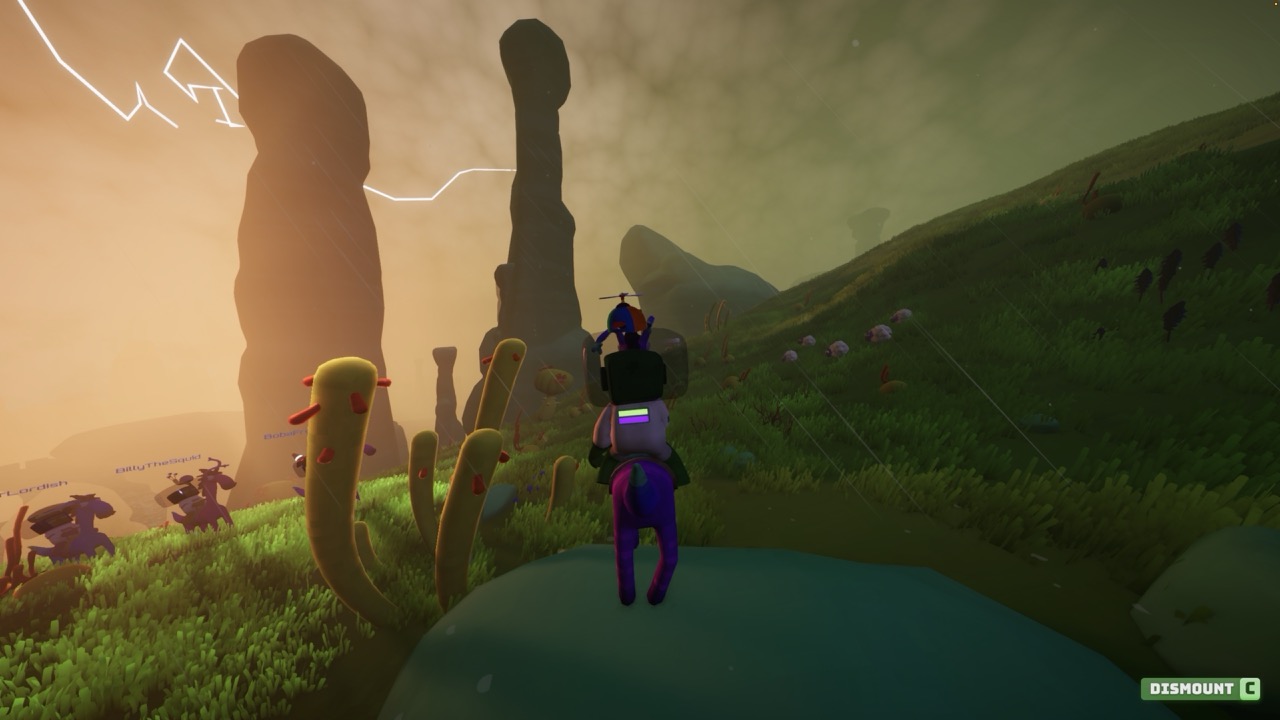
The game's real-time voice processing grew from a similar combination of technical curiosity and creative opportunity.
Before Ranchonauts had settled on a definitive concept, Benji already wanted to build a system for modifying players' voices. Games the team had played together used voice effects to reinforce the sense that friends were occupying a shared virtual space. The idea had also proved its worth during Arctic Awakening, where Benji and composer Joff Winks developed reverb systems for the voices of characters Kai and Alfie.
In that game, reverberation helped make spaces such as a janitor's closet or an underground cavern system feel tangible. Benji came away convinced that the audio processing was an essential part of the experience.
He also had a different kind of inspiration. While working as an editor on the audio-only improv comedy podcast Hello From the Magic Tavern, he regularly took raw conversations between actors and transformed them into fully mixed and mastered productions. Episodes featured spells, magical effects, and other fantastical events. Voice processing could conjure vivid, often hilarious images in the listener's imagination.
That experience suggested possibilities for a multiplayer game in which players could hear one another's voices change as they explored.
The first implementation was deliberately pragmatic. Benji created in-game effects corresponding to the effects available in FMOD Studio, with some variations — an equalizer, for example, became separate low-pass and high-pass filters.
He was tempted to go further. An auto-tune effect that made players sound like T-Pain would have been funny, he thought, but it wasn't necessary to get the system into players' hands.
Instead, he followed the path of least resistance and built pitch effects among the available options.
A prototype maze gave the team a place to experiment. Different rooms applied different effects to players' voices. One room, which applied vibrato, became so ridiculous that the team would regularly dissolve into laughter.
And then the next idea practically suggested itself.
“Once you have players running through a maze and suddenly having these tiny-sounding high-pitched voices, it becomes obvious what to do next.”
James built the shrink ray.
The resulting mechanic is a particularly neat example of the relationship between Benji's engineering and the team's design. Benji didn't begin by implementing a shrink ray. He built a capability that made voices sound higher, then watched how the team responded to it. The reaction suggested a game mechanic, and James turned that possibility into a tool players could use.
The same audio system helps sell the scale of Ranchonauts' landscapes. Reverb increases as other players move farther away, making the world feel expansive and giving distant voices a sense of space. Other status effects extend the joke: a shrunken player's voice becomes high-pitched, while a player who grows enormous sounds deeper and more booming. Even footsteps can change, becoming slower and more thunderous.
The voice effects aren't merely cosmetic. They connect the game's physical transformations to the way players perceive one another, giving a change in size an audible presence. They also create new opportunities for comedy without requiring a scripted punchline.
The pleasure of things going wrong
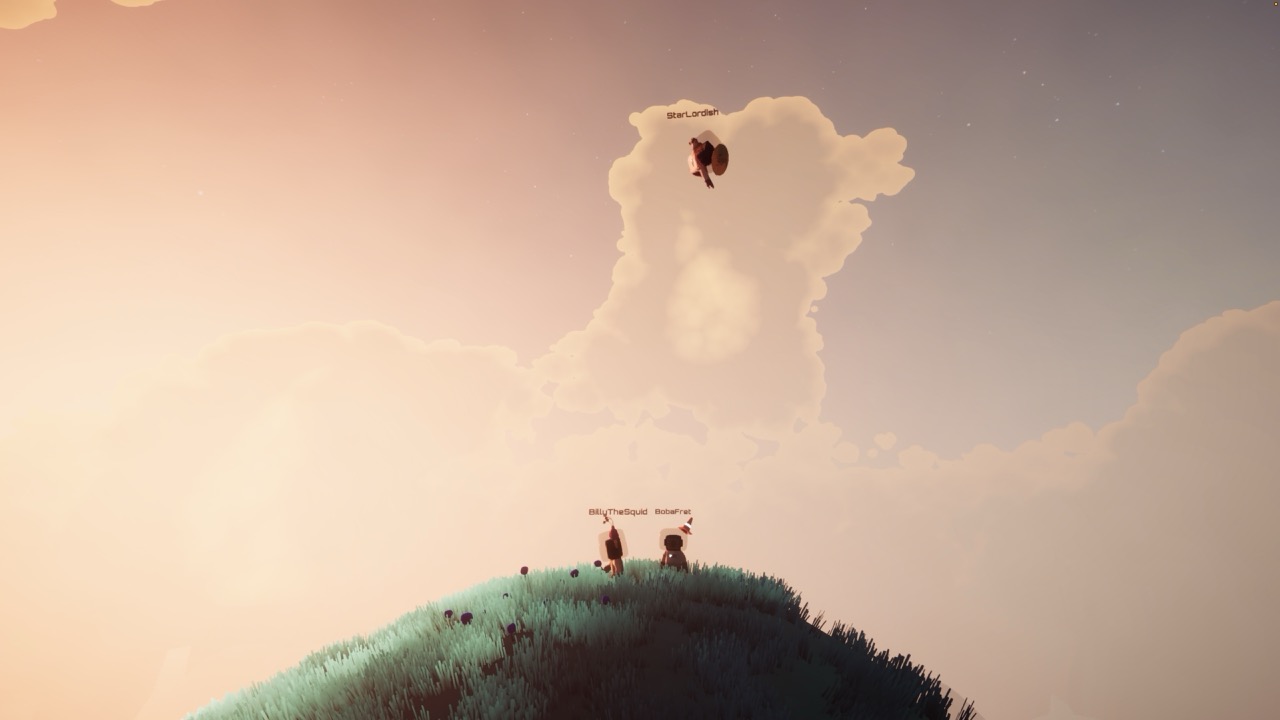
The same philosophy extends to the interactions between gameplay systems.
One day, Benji discovered that placing a sheep cannon in front of a gravity well could cause sheep to be launched out of the cannon, pulled back into it, and launched again. The cycle could continue indefinitely, effectively giving the cannon infinite ammunition.
It wasn't a useful strategy for completing the game's objective. Players earn money by getting sheep back to the ranch before sundown; feeding them endlessly into a cannon doesn't help. But it was funny, and the team kept it.
“Generally speaking, if something is fun or funny, we keep it.”
The distinction matters. The team's goal isn't simply to optimise the efficiency of sheep delivery. It's to make a game that friends enjoy playing together. An exploit that produces an entertaining shared experience can therefore have value even when it offers no practical advantage.
Not every accident survives development, of course. The sheep have a tendency to crawl down slopes, and one particularly memorable instance saw a flock moving single-file towards the edge of a cliff, peering over, then apparently choosing to dive into the water below, bleating all the way down. Benji watched the spectacle unfold while the game ran in the background during a meeting.
The behaviour had to be partially patched out because the sheep's movement on slopes needed adjustment for other gameplay reasons. The particular spectacle may still be possible, but Benji has only seen it once.
It's an apt reminder that emergent behaviour doesn't always fit neatly into a development plan. Some accidents reveal delightful possibilities; others expose underlying problems that need to be fixed. The trick is to pay attention, understand what produced the result, and decide whether it contributes to the experience the team wants to create.
Making room for the unexpected
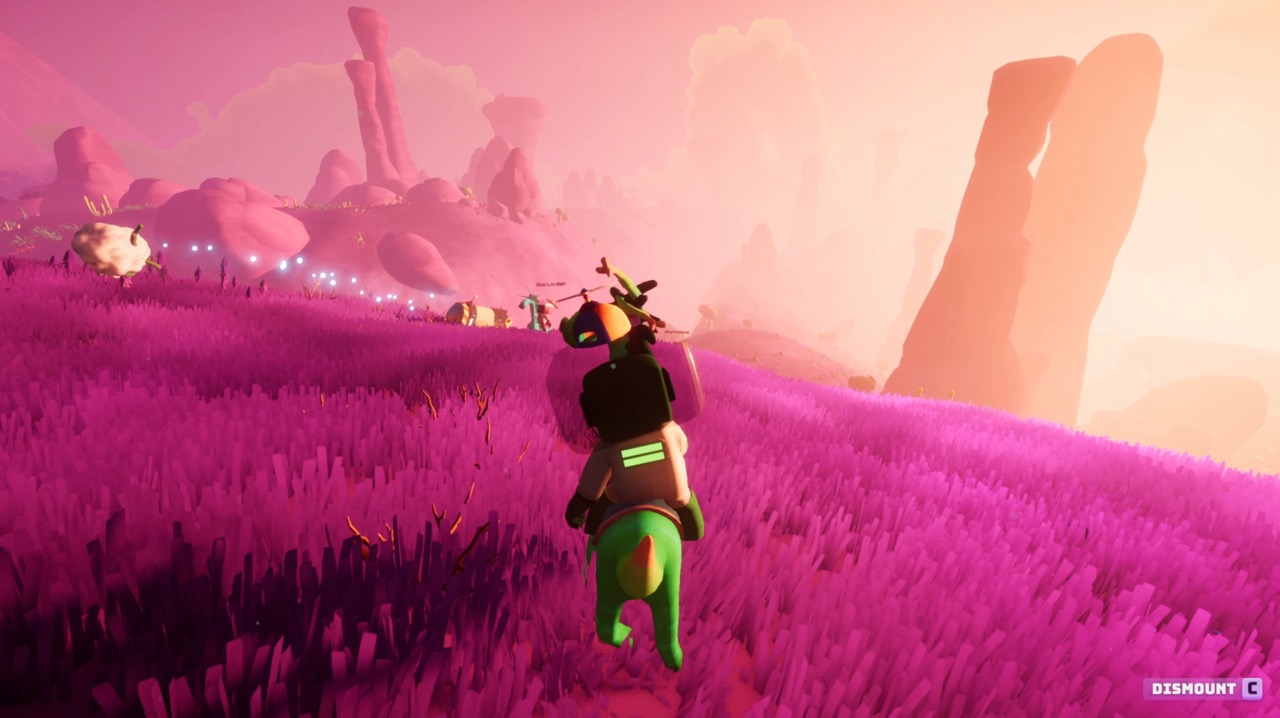
What makes Ranchonauts compelling to Benji isn't any single technical system or audio gag. It's the way the elements come together to create a distinctive whole.
The landscapes, the sheep, the hazards, the tools, the voice effects, and the networking all contribute to a world in which players can get lost, make mistakes, invent their own objectives, and occasionally stumble into something nobody on the team anticipated.
That coherence is also a team achievement. Benji is particularly enthusiastic about the world created by 3D artist Alex Moralo, whose contributions include concepts for characters, sheep, and landscapes. James's willingness to recognise the potential in the original sheepherding prototype helped give those creative contributions a framework in which to flourish. The wider team has shaped the experience through its own ideas and experimentation.
For Benji, making a real-time 3D multiplayer game has been a dream since childhood. He's proud that Ranchonauts brings together so many elements into something that can be fun, chaotic, cute, and occasionally beautiful.
Its most memorable moments may not be the ones the developers set out to create. They might be a flock of sheep endlessly cycling through a cannon, a friend's voice suddenly transformed by a status effect, or Rafael arriving in town at the last possible moment with far more sheep than anyone thought he could possibly have found.
The team can build the systems, tune the mechanics, and give players the tools. What happens when all of that meets a group of friends is harder to predict.
That's the point.